Source CE Certified Cookie Dough Divider for Bakery Use
Find and compare 30 CE certified cookie dough divider models from Guangzhou and Shanghai suppliers. These electric machines handle bread, pizza, and biscuit dough with customizable piece counts and stainless steel construction for commercial bakery efficiency; compare the available evidence and request quotations based on your requirements.
Key considerations
Products List


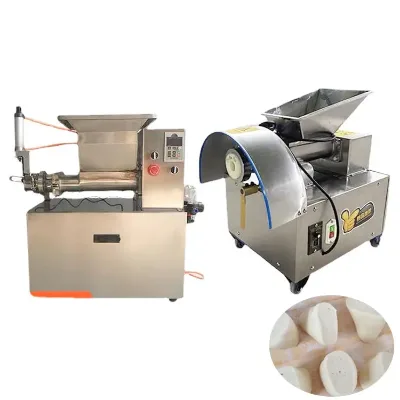


Comprehensive Sourcing Guide
CE Certified Cookie Dough Divider Sourcing Guide
Sourcing industrial dough dividers requires careful attention to technical specifications and compliance documentation, particularly when targeting equipment that bears CE certification marks. Buyers must distinguish between machines designed for high-volume commercial bakeries and those suited for smaller production environments. The core keyword highlights a specific intersection of regulatory compliance and functional utility, where the machine’s ability to consistently portion dough is as critical as its legal standing in the European market. Understanding these nuances ensures that procurement teams select equipment that aligns with both operational throughput requirements and regional safety mandates.
This guide provides a structured approach to evaluating cookie dough dividers, focusing on observable listing signals and verifiable technical data. By examining the provided product attributes, such as power sources, material compositions, and packaging standards, buyers can form a realistic baseline for comparison. The analysis avoids speculative claims and instead relies on documented facts to highlight what is typically available in the market. This disciplined approach helps procurement professionals navigate the complexities of international machinery trade, ensuring that every decision is backed by concrete evidence rather than marketing assertions.
Product Scope and Observed Listing Signals
The observed product landscape reveals a diverse range of dough dividers originating primarily from Guangzhou and Shanghai in China, with prices spanning from 100 to 5500 USD. These units vary significantly in capacity and physical dimensions, with models like the BM-20H and YK-36E offering distinct operational profiles. The presence of both 220V and 380V voltage options indicates that buyers must match the equipment to their facility’s electrical infrastructure. Additionally, the observed minimum order quantities (MOQ) ranging from 1 to 5 pieces suggest flexibility for small bakeries, while the variety of models supports larger industrial operations seeking specialized solutions for bread, pizza, and biscuit production.
Material composition and packaging are critical indicators of build quality and shipping safety. Most observed units are constructed from stainless steel, a standard requirement for food-contact surfaces due to its durability and ease of cleaning. Packaging methods range from neutral packing to robust plywood cases, reflecting the need to protect precision mechanical components during transit. The observed net weights, such as 380kgs for certain models, highlight the substantial mass of these machines, which impacts installation logistics and floor load requirements. Buyers should verify these physical attributes against their specific site constraints to avoid unexpected handling or structural issues upon delivery.
Technical Specifications to Verify
Voltage and power source compatibility are paramount when integrating a dough divider into an existing production line. The observed data shows a split between 220V and 380V systems, meaning buyers must confirm their facility’s electrical supply before placing an order. Mismatched voltage can lead to equipment failure or safety hazards, making this the first technical verification step. Furthermore, the power source is consistently listed as electric, which implies a reliance on stable grid connectivity rather than pneumatic or hydraulic alternatives. Procurement teams should request detailed electrical schematics from suppliers to ensure seamless integration with other bakery equipment, such as mixers and proofers, without overloading local circuits.
Dimensional accuracy and output consistency are equally vital for operational efficiency. Observed standard sizes vary widely, from compact units measuring 5204001040mm to larger industrial models reaching 7405702100mm. Buyers must assess whether the machine’s footprint fits their available floor space while allowing for safe operator access. Additionally, the cutting capacity, such as 36 pieces per cycle for models like the ZT-36, directly influences production speed. The weight range of each dough piece, observed between 30-180g, indicates the machine’s versatility in handling different product types. Verifying these specifications against production targets ensures that the selected divider meets both spatial and throughput requirements.
Compliance and Safety Documentation
CE certification is a critical requirement for machinery intended for use in the European Economic Area, signaling adherence to strict health, safety, and environmental protection standards. The observed listings mention CE certification, often alongside the option to produce other certificates as required, which suggests that suppliers may offer additional regional compliance documentation. Buyers must verify that the CE mark is genuine and accompanied by a valid Declaration of Conformity. This document should list the specific directives applied, such as the Machinery Directive, and confirm that the machine has undergone appropriate risk assessments. Relying on unverified claims can lead to customs delays or legal liabilities, making thorough documentation review essential.
Beyond CE marking, other safety features and operational safeguards should be scrutinized. The absence of a timing device in some observed models may require manual intervention or integration with external control systems, which could impact workflow efficiency. Buyers should inquire about emergency stop mechanisms, guarding protocols, and noise levels to ensure operator safety. Additionally, the material of construction, typically stainless steel, must meet food-grade standards to prevent contamination. Requesting test reports or third-party verification of these safety features provides an extra layer of assurance. This due diligence protects the buyer from potential accidents and ensures that the equipment operates within legal and ethical boundaries throughout its lifecycle.
Cost Drivers and Commercial Terms
The price range of 100 to 5500 USD reflects significant variations in machine capacity, material quality, and included features. Higher-priced units likely offer greater durability, advanced automation, or specialized cutting mechanisms for specific dough types. Buyers should analyze the cost per unit of output to determine the true value proposition, rather than focusing solely on the initial purchase price. The observed MOQ of 1 to 5 pieces allows for scalable procurement, enabling businesses to start small and expand as needed. However, bulk purchases may offer economies of scale, so evaluating total cost of ownership, including maintenance and energy consumption, is crucial for long-term financial planning.
Shipping and packaging costs are substantial factors influenced by the machine’s weight and dimensions. Observed packing sizes, such as 6305301400mm for 0.47cbm volume, indicate that freight charges can significantly impact the final landed cost. Buyers should negotiate clear Incoterms to define responsibility for transport, insurance, and customs duties. Additionally, the type of packaging, whether neutral, wooden, or plywood case, affects protection during transit and potential damage risks. Understanding these commercial terms helps in budgeting accurately and avoiding hidden expenses. Clear communication with suppliers regarding delivery timelines and payment terms further mitigates financial risks associated with international procurement.
Supplier Qualification and Quality Control
Verifying supplier credentials is essential to ensure reliability and product consistency. Buyers should request business licenses, factory audits, and references from previous clients to assess the supplier’s track record. The observed origins in Guangzhou and Shanghai suggest access to established manufacturing hubs, but this does not guarantee quality. Implementing a rigorous qualification process, including sample testing or factory visits, helps identify capable partners. Additionally, checking for ISO certifications or other quality management standards can provide insight into the supplier’s internal processes. A qualified supplier should demonstrate transparency in their operations and a commitment to continuous improvement.
Quality control measures during production and pre-shipment inspections are critical for minimizing defects. Buyers should specify acceptance criteria for dimensional accuracy, material thickness, and functional performance. Requesting pre-shipment inspection reports from third-party agencies can provide an objective assessment of the machine’s condition. Additionally, establishing a clear warranty and after-sales support policy ensures that any issues are addressed promptly. Communication channels should be open and responsive, allowing for quick resolution of technical queries. By prioritizing supplier qualification and robust quality control, buyers can reduce the risk of receiving substandard equipment and ensure long-term operational success.
Long-Term Procurement Checks
Regular maintenance and spare parts availability are key to sustaining machine performance over time. Buyers should inquire about the availability of replacement components, such as cutting blades or motors, and the lead times for their delivery. A comprehensive maintenance manual and training resources should be provided to ensure proper operation and care. Establishing a preventive maintenance schedule helps identify potential issues before they cause downtime. Additionally, monitoring the machine’s performance metrics, such as portioning accuracy and energy consumption, allows for proactive adjustments. Long-term procurement checks ensure that the initial investment continues to deliver value throughout the equipment’s lifespan.
Feedback loops and continuous improvement strategies are vital for optimizing procurement processes. Buyers should document their experiences with the machine, including any operational challenges or maintenance needs, to inform future purchasing decisions. Engaging with the supplier for regular updates on new models or technological advancements can keep the production line competitive. Additionally, participating in industry forums or networks provides insights into best practices and emerging trends. By maintaining a proactive approach to long-term procurement, buyers can adapt to changing market conditions and ensure that their bakery operations remain efficient and compliant. This strategic perspective transforms procurement from a transactional activity into a value-generating function.
FAQs
What certifications are available for cookie dough dividers?
CE certification is available for these machines, and other certificates can be produced as required by the buyer. This ensures compliance with international safety standards for bakery equipment. Buyers should verify specific documentation needs with the supplier before ordering to ensure the machine meets local regulatory requirements for their intended market.
Which models support customized production for bakeries?
Customization is available for specific models such as the YK-36E and BM-20H. These units can be tailored to meet unique bakery requirements. Buyers seeking non-standard configurations should consult the manufacturer directly. The availability of customized options allows for better integration into existing production lines and specific dough handling needs.
How many pieces can the YK-36E divide dough into?
The YK-36E model divides dough into 36 pieces per cycle. This capacity is suitable for high-volume production of small items like baguettes or hotdogs. The machine ensures consistent weight distribution for each piece. This feature helps maintain product quality and reduces waste in commercial bakery operations requiring uniform portion sizes.
What voltage options are available for these dividers?
Voltage options include 220V and 380V configurations. The 220V model is suitable for standard commercial power supplies, while 380V supports heavier industrial loads. Buyers must select the correct voltage based on their facility's electrical infrastructure. Incorrect voltage selection can lead to operational issues or equipment damage during installation.
Where are these cookie dough dividers manufactured?
These machines are manufactured in Guangzhou and Shanghai, China. Guangzhou is the origin for models like the YK-36E and BM-20H. Shanghai produces units such as the ZT-36 and CG-38. Buyers should specify the desired origin when requesting quotes, as shipping costs and lead times may vary between these two major manufacturing hubs in China.
What packaging is used for shipping these machines?
Packaging options include neutral packing, wooden packages, and plywood cases. The ZT-36 and CG-38 models use plywood cases for protection. The YK-36E comes with a wooden package. Proper packaging ensures the machine arrives safely. Buyers should confirm the packaging type with the supplier to ensure adequate protection during international transit.